
Financial Preparedness Starts With an Emergency Fund
Every September, National Preparedness Month encourages households to prepare for the unexpected by understanding local risks, making an emergency plan, and assembling essential supplies. Financial preparation belongs in that conversation too.
An emergency fund can help cover an urgent repair, medical expense, or temporary loss of income without immediately relying on high-interest credit cards or withdrawing money from retirement accounts. September is a useful time to review what you have saved, set a new target, and take the next manageable step.
Key Takeaways
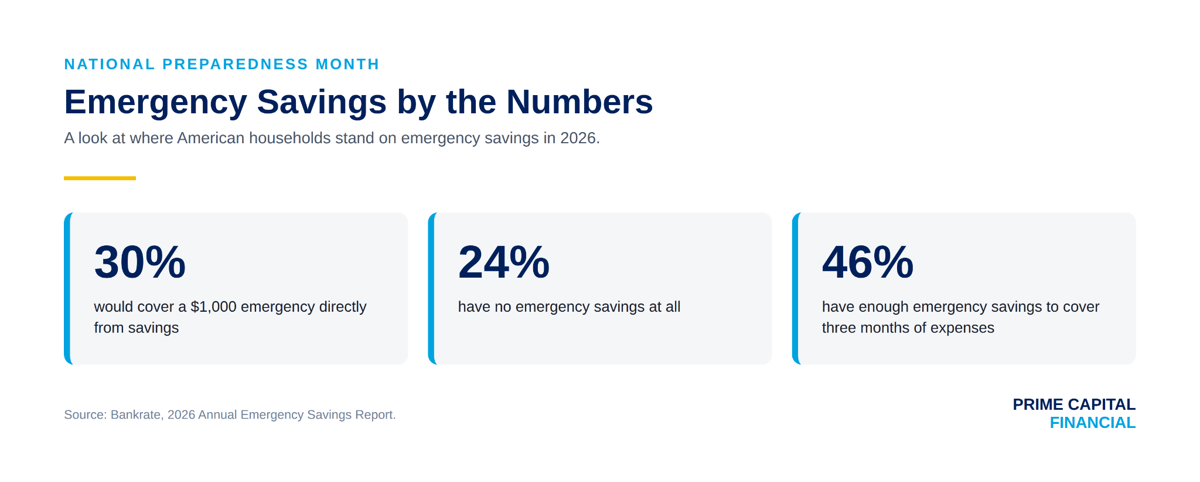
- Only 30% of Americans would cover an unexpected $1,000 expense directly from savings.
- Nearly one in four Americans has no emergency savings at all.
- Only 46% of U.S. adults have enough emergency savings to cover three months of expenses.
- Six in 10 Americans are prioritizing emergency savings, either on its own or alongside paying down credit card debt.
Why an Emergency Fund Matters
Unexpected expenses show up whether or not a household is ready for them. A car repair, a medical bill, or a sudden job loss can all arrive without warning. An emergency fund gives a household breathing room to handle these moments without immediately relying on high-interest credit cards or withdrawing money from retirement accounts.
How Much to Save
Many financial professionals suggest working toward three to six months of essential living expenses. For someone just getting started, a smaller and more manageable target can provide an important first layer of protection. That might mean saving enough to cover an insurance deductible, an essential car repair, or another common unexpected expense before building toward the larger goal.
Where to Keep It
A dedicated savings account, kept separate from everyday checking, can help prevent an emergency fund from gradually being spent on routine expenses. An interest-bearing savings account may also allow the balance to grow while keeping the money readily accessible. Interest rates, fees, minimum-balance requirements, withdrawal options, and account terms should be reviewed before selecting an account.
Five Ways to Build One
- Automate contributions: Set up a recurring transfer to a dedicated savings account each payday, even if the amount starts small.
- Choose an initial target: Begin with an achievable amount or the cost of one likely emergency, then work toward several months of essential expenses.
- Redirect one-time income: Tax refunds, bonuses, or other one-time income can help build the fund more quickly.
- Include it in the budget: Treating emergency savings as a recurring monthly expense can help make contributions more consistent.
- Name the account: Labeling the account “Emergency Fund” in online banking can reinforce its purpose and create a sort of psychological barrier that can help reduce the temptation to use it for planned purchases.
What an Emergency Fund Can Be Used For
An emergency fund is generally intended for necessary, unplanned expenses, such as:
- A sudden loss of income
- Medical or dental costs not covered by insurance
- Urgent home or car repairs
- Unexpected travel for a family emergency
Predictable or discretionary expenses, such as vacations, holiday purchases, or routine maintenance, are generally better addressed through a separate savings goal.
A Timely Reminder From National Preparedness Month
National Preparedness Month encourages households to understand the emergencies they may face, make a plan, assemble essential supplies, and prepare alongside their communities. Financial reserves can support each part of that process. Savings may help a household purchase necessary supplies, manage an evacuation or temporary relocation, replace spoiled food after an extended power outage, or cover expenses that arise during recovery.
Building an emergency fund does not have to happen all at once. If you would like help determining an appropriate savings target or incorporating cash reserves into your broader financial plan, connect with a Prime Capital Financial advisor.
Frequently Asked Questions About Emergency Funds
How much should I have in an emergency fund? A common guideline is three to six months of essential living expenses. The appropriate amount depends on factors such as income, job stability, household expenses, insurance coverage, and family needs. Starting with a smaller, manageable goal can help build momentum.
Where should I keep my emergency fund? A separate, readily accessible savings account is often a practical option. An interest-bearing account may help the balance grow while keeping the money available when needed. Account rates, fees, minimum balances, insurance coverage, and withdrawal terms should be reviewed.
What should an emergency fund be used for? An emergency fund is generally intended for necessary, unplanned expenses, such as a sudden loss of income, medical costs, urgent home or car repairs, or emergency travel.
Is $1,000 enough for an emergency fund? A $1,000 emergency fund can be a useful starting point and may help cover smaller unexpected expenses. The longer-term goal will depend on the household’s essential expenses, risks, income, and available resources.
Can I use my emergency fund for planned expenses? Predictable expenses, such as vacations, holiday purchases, insurance premiums, or routine maintenance, are generally better covered through a separate savings goal. Reserving emergency savings for unplanned needs helps ensure the money is available when it is most needed.
Sources
Let’s Chat!
If you have questions about this topic, or any others, and would like to speak to a financial advisor, fill out the form below and a member from our team will reach out to you shortly.
This information does not constitute legal advice. Prime Capital Financial and its associates do not provide legal advice. Individuals should consult with an attorney regarding the applicability of this information for their situations.
Advisory products and services offered by Investment Adviser Representatives through Prime Capital Investment Advisors, LLC (“PCIA”), a federally registered investment adviser. Tax planning and preparation services are offered through Prime Capital Tax Advisory. PCIA: 6201 College Blvd., Suite 150, Overland Park, KS 66211. PCIA doing business as Prime Capital Financial | Wealth | Retirement | Wellness | Family Office | Tax Advisory.